
There’s something quietly magical about a perfectly soft-boiled egg-a humble delight that transforms breakfast from ordinary to extraordinary with its tender, custardy yolk and delicately set white.Achieving that ideal texture,however,can be surprisingly elusive,often leaving home cooks guessing and experimenting.In this exploration of “The Art of Soft-Boiled Eggs,” we’ll crack open the secrets behind timing, temperature, and technique to help you master this simple yet sublime culinary ritual.Whether you’re a seasoned foodie or a curious beginner, prepare to discover how precision and patience combine to deliver the perfect soft-boiled egg every time.
Soft-boiled eggs hold a timeless charm, embodying simplicity and elegance on a breakfast plate.Achieving the perfect yolk-creamy, runny, and vibrant-hinges on several key factors, from selecting the right eggs to mastering timing and peeling techniques. These subtle artful details transform a humble ingredient into a culinary delight that delights both the eyes and the palate.
Choosing the Right Eggs for Optimal Soft-Boiled Results
For soft-boiled eggs with ideal texture, start by picking the freshest eggs you can access, preferably from local farms or trusted organic sources. Fresh eggs have firmer whites, which help maintain structure during boiling, resulting in a lush yet tender white that sets perfectly around the yolk. Medium to large-sized eggs are ideal as their size provides more forgiving cooking windows. Bring your eggs to room temperature before cooking to prevent cracking and uneven doneness.
Mastering the Timing: How to achieve That Ideal Runny Yolk
Precision is your best friend when it comes to timing.Place eggs into gently boiling water using a slotted spoon. For a brilliantly runny yolk encased in softly set whites, cook for exactly 6 minutes for large eggs. Adjust by 15-20 seconds if you use medium or XL eggs. Use a kitchen timer and resist the urge to peek early. As soon as the clock stops, transfer the eggs instantly to an ice bath to halt cooking, which locks in that coveted creamy center.
Techniques for Consistent Peeling Without Compromising Texture
Peeling soft-boiled eggs without tearing the delicate whites can be challenging, but the secret lies in the ice bath soak. Let the eggs chill for at least 5 minutes, which cools the membrane and contracts it from the shell. Gently tap the egg on a hard surface, then roll it under your palm to create uniform cracks. Peel starting from the wider end where the air pocket resides, easing the shell away underneath cool running water. This water helps lift stubborn bits and preserves the egg’s smooth texture.
Serving Suggestions to Elevate Your Soft-Boiled Egg Experience
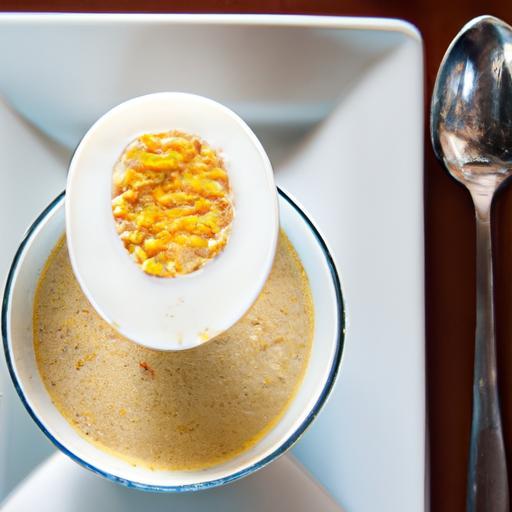
Elevate the humble soft-boiled egg by serving it nestled atop buttery toast soldiers seasoned with flaky sea salt and cracked black pepper. Consider a drizzle of truffle oil or sprinkle of fresh chives,edible flowers,or microgreens for a touch of color and freshness. For a heartier option, serve alongside a vibrant avocado mash or incorporate into a warm bowl of ramen or seasoned grains. The contrast of textures and complementary flavors enhances every spoonful of that luscious yolk.
Prep and Cook Time
- Preparation: 5 minutes (including bringing eggs to room temperature)
- Cooking: 6 minutes
- Cooling: 5 minutes
Yield
Serves 2-3 people (4 eggs)
Difficulty Level
Easy - Perfect for beginners but rewarding for pros seeking consistency
Ingredients
- 4 large fresh eggs, at room temperature
- Water, enough to cover eggs by 1 inch
- Ice, for ice bath
- Flaky sea salt, for finishing
- Freshly ground black pepper
- Optional garnishes: chopped chives, microgreens, avocado slices, truffle oil
Instructions
- Bring a medium pot of water to a gentle rolling boil, ensuring there is enough water to cover the eggs by approximately 1 inch.
- Carefully lower the eggs into the boiling water using a slotted spoon to avoid cracking.
- Start your timer for exactly 6 minutes for large eggs, adjusting the time slightly for different egg sizes.
- While eggs cook, prepare a large bowl of ice water to create an ice bath once cooking is done.
- At the 6-minute mark,immediately remove eggs with the slotted spoon and transfer to the ice bath.
- Let the eggs rest in the ice bath for at least 5 minutes to stop cooking and ease peeling.
- To peel, gently tap the egg all over on a hard surface and roll it lightly under your palm to loosen the shell.
- Peel starting from the wider end where the air pocket is located, using cool running water to rinse away tiny shell fragments.
- Serve warm topped with a pinch of flaky sea salt and freshly ground black pepper, then garnish as desired.
Tips for Success
- Bring eggs to room temperature before boiling to reduce cracking.
- Use a fine mesh spoon to gently lower and remove eggs to avoid shell damage.
- Always plunge eggs into an ice bath promptly to preserve yolk texture.
- For softer whites,reduce boiling time by 15-30 seconds; for firmer yolks,add up to 1 minute.
- Experiment with organic or free-range eggs for richer flavor and vibrant yolk color.
- Soft-boiled eggs can be made ahead; store peeled eggs in cold water up to 24 hours before serving.
Serving Suggestions
- Toast ”soldiers”: strips of buttered toast perfect for dipping into the runny yolk.
- Sprinkle with fresh herbs such as chives or tarragon for an herbal aroma.
- Pair with avocado smash and a sprinkle of chili flakes for a breakfast punch.
- Add atop grain bowls or ramen for an added rich texture boost.
- Drizzle a few drops of high-quality olive or truffle oil to add layers of flavor.
| Nutrient | Per Egg (Large) |
|---|---|
| Calories | 70 kcal |
| Protein | 6 g |
| Carbohydrates | 0.6 g |
| Fat | 5 g |
for more inspired ways to enjoy egg dishes and boost your kitchen skills, check out our article on Perfect Poached Eggs: A Step-by-Step Guide. To deepen your understanding on egg quality and freshness, the American Egg Board is an excellent resource: Astonishing Egg – Egg Quality.

Q&A
Q&A: The Art of Soft-Boiled Eggs - Perfect Texture Every Time
Q: What makes a soft-boiled egg different from a hard-boiled egg?
A: the magic lies in timing and temperature. A soft-boiled egg features a firm white encasing a luscious, runny yolk, whereas a hard-boiled egg is cooked through, solidifying both white and yolk. Achieving that perfect ooey-gooey center while ensuring the white holds its shape is the true art of soft boiling.
Q: How long should I cook an egg to get the ideal soft-boiled texture?
A: Timing is everything. For large eggs, gently simmer in boiling water for about 5 to 6 minutes.This window unlocks a tender white wrapped around a golden, creamy yolk that flows with every spoonful.Adjust cooking times slightly for smaller or jumbo eggs, but 5 minutes is an excellent starting point.
Q: Does starting with cold or hot water affect the result?
A: Absolutely. Plunging eggs into already boiling water jumpstarts the cooking process, making it easier to control timing and texture. Starting eggs in cold water and then heating them gradually tends to yield less consistent results for soft-boiled eggs.
Q: What’s the best method for peeling soft-boiled eggs without losing that delicate white?
A: After cooking, transfer eggs immediately to an ice bath – this halts cooking and firms up the whites just enough for easy peeling. Crack gently and peel under running water, which helps separate the shell from the tender egg beneath without sacrificing that silky exterior.
Q: How fresh should the eggs be for perfect soft-boiled results?
A: Surprisingly, slightly older eggs peel more cleanly because their pH level changes over time, loosening the membrane from the shell. If your eggs are too fresh, peeling can be tricky, although the flavor and texture remain wonderful in either case.
Q: Can soft-boiled eggs be customized or flavored?
A: While the egg itself speaks volumes with its simplicity, consider a pinch of sea salt, cracked black pepper, or a sprinkle of finely chopped herbs like chives or parsley. These subtle touches highlight the egg’s natural richness without overshadowing its delicate texture.Q: is altitude a factor when soft-boiling eggs?
A: It sure is! At higher elevations, water boils at lower temperatures, which means you’ll need to increase your cooking time slightly to achieve that perfect soft-boiled consistency. Experiment by adding 30 seconds to a minute when boiling eggs above 3,000 feet.
Q: What’s the best way to serve soft-boiled eggs?
A: Soft-boiled eggs shine as a comforting breakfast nestled in egg cups, cracked open on top to reveal a golden river of yolk. They also add creamy delight to salads, ramen bowls, or atop toasted artisan bread with a touch of butter and seasoning.
Q: Can I prepare soft-boiled eggs in advance?
A: Soft-boiled eggs are best enjoyed fresh for that glorious runny yolk experience. However, you can prepare them ahead and store peeled eggs in cold water in the fridge for up to 24 hours-just know the yolk will continue to firm up over time.
Q: What common mistakes should I avoid when soft-boiling eggs?
A: Overcooking is the usual culprit, turning luscious yolks chalky and whites rubbery. Also, skipping the ice bath can leave eggs cooking internally longer than desired. Lastly, be gentle when peeling to preserve the silky texture that makes soft-boiled eggs so irresistible.Dive in with curiosity and patience-the art of soft-boiled eggs is as much about intuition as it is science. Every crack of the shell reveals a little sunshine in your kitchen!
The Conclusion
Mastering the art of the soft-boiled egg is more than just a cooking skill-it’s a celebration of patience, precision, and simplicity. With each perfectly timed minute and gentle crack,you unlock a world of velvety yolks and tender whites that elevate any meal from ordinary to extraordinary. Whether enjoyed atop buttered toast, nestled in ramen, or savored on its own, the soft-boiled egg invites you to slow down and appreciate the delicate balance of texture and flavor. So next time you reach for an egg, remember: perfection is just a few minutes away, waiting to transform your breakfast ritual into a moment of pure culinary joy.